Louie Biron
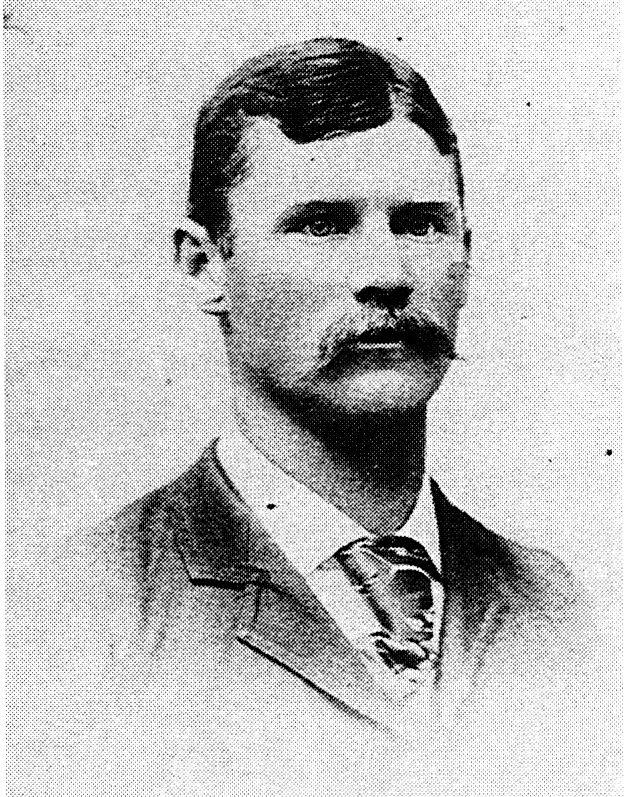
Many photos of family gatherings show the tall figure of Louie Biron. Biron had worked for the family in its stone quarry work and was burned in the blasting accident at Auer’s Landing in Calhoon County, IL.
Louis was hit in the throat and knocked over. The fact that he was knocked down saved his life, as it caused the flame to partly miss him. While the other man involved died of his burns, Louis spent five weeks in a St. Louis hospital. From that time, Biron lived with the family above the store, being regarded as an uncle by the youngsters in the extended family.
He was born in Wisconsin on April 24, 1859 to Louis Biron and Mary Steinfelder. At the time of the accident, Louis’s mother was 700 miles away, at Superior. However, when the accident happened she had such a feeling that things were wrong at home that she came to Alma and learned of her son’s accident.[1]
Biron died in the family residence above the store on July 30, 1926, at the age of 67. Frank Harry notified the civil authorities. Dr. J.L. Tenney signed the death certificate. Official caused of death was listed as “apoplexy” which would be called a stroke today. For years, the family story was that the during a family meal, Biron choked on a piece of meat and died. He was buried in the Alma Cemetery on August 1, 1926.[2]
Mary Prader
Few non-family members played as critical a role in the Harry Family as did Mary Prader. A registered midwife, practicing in Alma from 1873 until 1922, Mary was present at eleven of the birth of Harrys. The first was the birth of Clara, the second child of John and Annie Harry, on October 13, 1874. The final Harry delivered by Prader was Russell Smith on June 30, 1896, recorded as her 906th birth.[3]
Other family members born by the long time midwife were: Fred and Caroline Harry’s daughter Eva; John and Annie Harry’s children, Emma R., Frank, Mae, Louise, Julia, and Earl; Emil and Anna Lehman’s son Fredrick; and from Nelson Township, Henry and Bertha Wirth’s daughter Clara.
The Alma Theater
In 1913, Louise and Frank Harry joined with Fred Reiter in establishing Alma’s first moving picture theatre at 207 North Main. Silent films, accompanied by a piano player were shown. The piano player also provided entertainment during the intermissions. By 1924, the family was out of the business.
At the time of R.N. Smith’s death in 1939, he was pushing to start a modern theater in Alma. He traveled to Madison, WI. to make final arrangements with the Wisconsin Industrial Commission for the remodeling of the former Ibach Building into a theater. This venture ended when R.N. died.[4]
Other Trips Down the Mississippi
The John Harry family frequently traveled on the river as part of John’s involvement in the federal government’s river projects. The accounts of two other boat trips taken down the Mississippi survive today. Both were on the “Eileen II,” a 24 foot launch. John F. Harry and his brother Frank took the first trip in August of 1925. John F. went on the second trip as well, this time with his youngest brother, Earl. That trip began in November of 1927 and would conclude on June 1, 1928. However, from the end of November until the middle of May, the Eileen II was put in dry dock at Davenport.
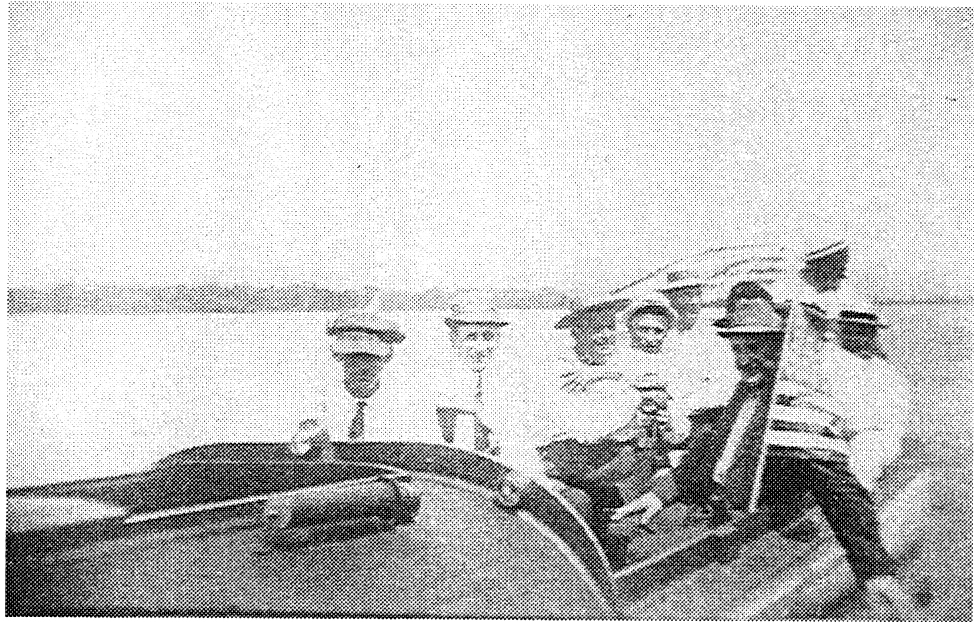
The written account was discovered after the death of John F. Harry in December 1975. It is a running record, almost hour-by-hour, of the trip. John E. Harry published it in 1985. He remembers the day Earl and his father, John F. began their trip. The whole family lined the railroad tracks behind the family home to wave good-bye.
It was only after the travelers returned home that everyone found out that, at the south end of Alma, they had “swamped” the canoe they were towing. The canoe had been loaded with filled gas cans, food, and other necessities. The waves created by the launch’s 19 inch wheel proved problematic. The journal is filled with references to “swamping” the canoe.
The Eileen II replaced the sunken boat by the same name. R.N. Smith named it for one of his daughters and later sold it to his brothers-in-law. It carried the family to many picnics, with the family sitting in semi-circular seats that ringed the launch’s rear cockpit. The boat also served years hauling seine flats the family used in their fishing.
The Alma Oil Company
A 1924 article in the Buffalo County Journal headlined “Alma Oil Company Now Incorporated”.[5] Incorporated under the laws of the State of Wisconsin, its purpose was “to buy and sell oil equipment and petroleum products, and to conduct a general oil business, and to deal in denatured alcohol, and any other produce generally handled by oil dealers and jobbers.” Those incorporating the company were R.N. Smith, R.H. Smith as well as brothers John F., Frank, and Earl Harry. The article notes that the family had been carrying on the oil business as a partnership for over three years under the same name.
The article goes on to comment on the company’s “excellent service to the community” and that “the business has become well established, with a valuable equipment of storage tanks, filling stations, and delivery trucks.”
The capital stock was listed as being worth $25,000 with preparations being made to handle an increase in business. The company’s first officers are listed with Frank Harry as president, John F. Harry as vice-president, R.H. Smith as sales manager, and R.N. Smith as secretary and treasurer.
The Good Ship Jolly Roger
On June 15, 1933, the Alma paper reported on the opening of a new entertainment center in the town– the Jolly Roger.
The floating dance pavilion “Jolly Roger” tied up at the foot of Pine Street had its opening dance Saturday evening. The barge, owned by Frank Harry and operated by R.A. Hill, has a dance floor, 26′ by 50′ and is equipped with a large phonograph which for a nickel in the slot will provide music for dancing parties afternoons and evenings.[6]
It did not take long for problems to develop. A week after this first article, the newspaper reported that 17 year old Laverne Dennison was killed by the train “The Empire Builder.” He had attended a dance on The Jolly Roger and was walking home.
The floating dance hall was a converted government dredge. The government removed all the machinery and put the barge up for auction. Frank Harry bought it for either $50 or $500 but sold the boat’s mast to the group constructing the dam for what he paid for the boat. They used the mast to run power lines across the river to the dam construction site.
A one story building was installed on the barge to house the dance hall, a bar, a poker parlor and other rooms for amusement. The first weekend of operation, they made an estimated $1,500. Unfortunately, R.A. Hill, the man hired to operate the boat left with the money and without his “wife.” Frank paid for her ticket back to her place of origin.
The boat was originally supposed to be named “Jolly Rogers” but Hill worked this name out in numerology and decided that was an unlucky combination. The name “Jolly Roger” would be luckier. Earl Harry replaced Hill and the boat became very successful. Perhaps it was too successful. The other Alma tavern owners got the City Council to refuse to give them a license to operate. However, when they shut down the Jolly Roger, people stopped coming to Alma on Saturday nights. Those same tavern owners saw their business decline. The tavern owners then asked Earl to open back up. However, demonstrating another of the family characteristics, Earl became stubborn. He held his ground and would not consider reopening. After all, those same bar owners had forced the closure.
Earl continued to live on the boat and the family used it to keep their boats and pack the fish to ship to New York. It was a wooden hull so it needed to be pumped out every day. The pumping was done with a hand pump instead of getting an electric one. The large open pipes that went through the bottom for dredging were still there. One night in 1937 there was a huge snow and the water apparently came in through those pipes and the Jolly Roger sank, leaving only a portion of the housing on top above the water.
The government loaned a couple of barges for the rescue. Cables were placed under the Jolly Roger and she was raised up level with the water. A stern wheel steamboat was brought in to push the wounded Jolly Roger to a sand bar on the other side of the channel. The water was high and the idea was that when the water went down, the Jolly Roger would be in “dry dock” and repairs could be made. However, the current was swift and it carried the sand away from one side of the boat and left it sitting at about a 45 degree angle. Earl ripped the building and dance floor off of it. The rest of the boat was left where it was.[7] It provided a great fishing spot for the family for many years to come.
The Alma Dry Milk Company
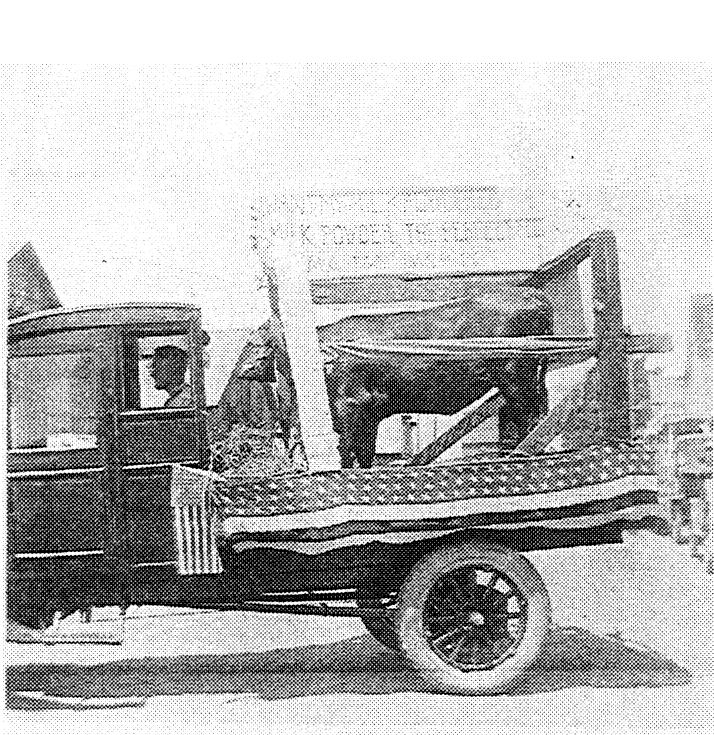
Frank Harry joined with other business men from Alma to organize the Alma Dry Milk Company in 1919. The manufacturing of Dry Milk was a relatively new process at the time and the Alma plant was only the fourth of its kind in the nation. The powder was then shipped to Minneapolis with the leftover cream being churned into butter.
For a variety of reasons, the Alma Dry Milk Company went bankrupt resulting in significant financial losses to its local investors.[8] In February 1926, the newspaper reported claims totaling $137,000 had been filed against the defunct company.[9]
The Government River Projects
Since the 1830’s, the federal government had been interested in strengthening the nation’s commerce through improved navigation on the Mississippi. The first efforts were focused on clearing menacing snags, shoals and sand bars, the excavation of rock in several stretches of rapids to clear a passage and the closing off of meandering sloughs and backwaters to confine water flow to the main channel. In 1878, the Congress authorized the creation of a 41/2 foot channel, the first comprehensive project on the upper Mississippi.
In 1907, a six foot channel was authorized and accomplished largely through the creation of hundreds of rock and brush “wing dams.” John Harry was a major contributor to this effort with rock from his quarry just above Alma. The wing dams are low structures extending radially from the shore into the river for varying distances to further constrict low-water flows.
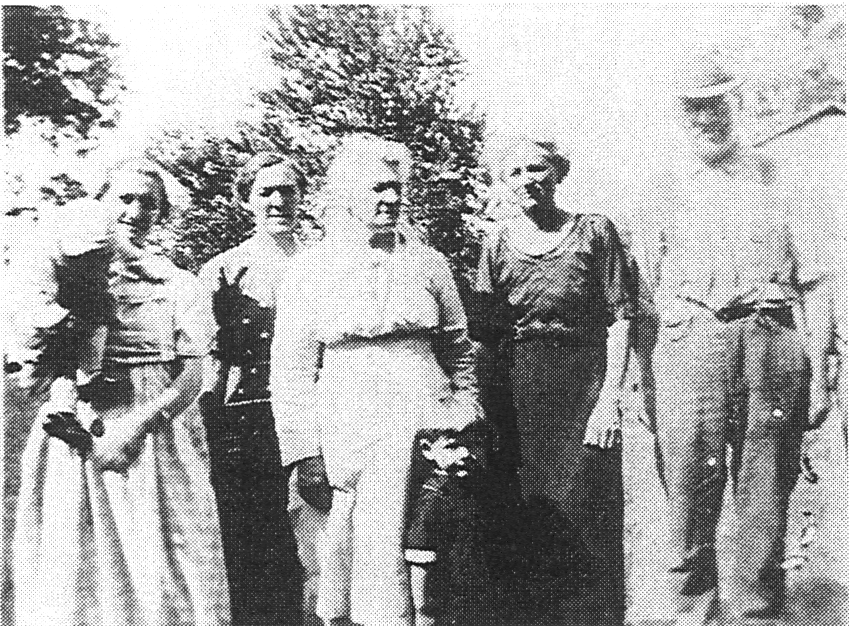
By the mid 1920’s, river commerce had fallen. After extensive studies, the U.S. Army Corps of Engineers got the Congress to authorize a nine-foot navigational project between the Missouri River and Minneapolis. A series of locks and dams, supplemented by dredging would insure a nine foot deep navigational channel some 400 feet wide.
In December of 1932 the first piling for Lock and Dam #4 at Alma was driven. It was to have major impact on the town’s life. It changed the city’s appearance and affected its function as a river port. Commercial boat traffic no longer was able to stop at the accustomed landings. Many of the nearby islands, including portions of Harry’s Island to the south and much of the family’s island just above the dam were now under water the majority of the time. Beef Slough, the home of some of the family over the years and the center of logging in the area was dramatically changed by the higher water behind the completed dam. The basement building used by the defunct Alma Electric Company and the family barn that stood next to the gain elevator were razed to make room for the dam parking lot. The gas station built by Charlie Radke, Louis Harry’s husband, was moved to downtown Alma.
The Lock and Dam did have its good points. Alma was not as hard hit by the Great Depression as other communities because of a sizable and steady payroll earned by the construction workers. The family involved themselves in various ventures made possible by the dam construction. The Harry Store provided food prepared by Mayme Harry for many of the workers. Workers were also housed in the rooms behind the store. When it came time to clear the land of trees before it was flooded, Frank, John F. and Earl hired and supervised the workers. However, family tradition is that no money was made on that part of the project.[10]
Alma Catholic Pastors
One of the important components of Alma at this time was the presence of a number of Churches and the family’s participation in a number of them. Emily Wirth Harry’s summarized the parishioners’ unofficial evaluation of the styles of those priests who served at St. Lawrence Catholic Church from 1935. Her reflection is undated but perhaps covers a less than 10 year period of time.
On September 1, 1935, our Bishop sent Father Scheuring to Alma as our first permanent pastor. Suppose he thot (sic) we had been “running wild” long enough. Our first impression of Father Scheuring was “What a kid, bet he’s no older than 21. He was 28.
He stayed here six years and accomplished very much for “just a kid”. He was in an auto accident while out west; was gone for one year. We then got Father Struckholtz from the Sacred Heart Home at Sparta. Our impression of Father Struckholtz, “Too foreign and too loud; it made some very nervous to hear his sermons.” His sermons were wonderful. Then came Father Ludwig. He was also too foreign, queer acting, and too soft in his speech. I’m glad others felt that way about him, as we then had a chance to make his acquaintance and also a deep friendship. Next came Father Borkowski. He was just a bundle of faults as far as the congregation at Alma was concerned. He substituted again when Father Scheuring left for Highland. When Father Borkowski told us we were getting a new pastor and he was leaving, his eyes sparkled and a smile spread over his face; it seemed like a load was lifted from him. No doubt about it. Then came the hero, Father Paquette and his dog, Pat. That man was a lieutenant and perfect in every way; all together too big for Alma; we all realized that fact. Soon complaints were made about Pat and Father Paquette was too streamlined; he went so fast in his prayers that no one could keep up with him. He remained here from October until January. Now we have Father Anthony Theucks– He’s rather slow in his prayers and so I suppose we’ll have to learn to slow up again. He gave a very good sermon Sunday and said he didn’t expect to please everyone because Christ couldn’t do it and he figured it was impossible. He has the right idea there. Especially if he stays at Alma. [11]
The Flood of 1965
The Spring 1965 thaw after record breaking winter snow falls brought record flooding along the Upper Mississippi River. Alma found itself struggling against the river. Various letters written by Emily Harry to family members capture the pressure that the town and family were feeling as they worked to control damage from the waters. Thanking Ruby Harry for her recent letter, Emily wrote:
It was a change from gazing at the Ole Man River on the rampage. The Old Man is really getting too chummy with us on Main Street, he has taken possession of our garden on the north and part of the yard on the south. … Our basement and cellar have about four or more feet of water in them; water to the top of the opening that goes into the basement from the outside. … So I just stand on the back porch and toss the pail of dishwater, wash water, etc. out into the Mississippi which was never so close to our door.[12]
Because the electric motor had been taken off the furnace, there was no heat in the house nor did they have hot water. There were restrictions on using the sewer system.
An additional fear for the town was the news that a large sheet of ice had broken free from Lake Pepin and was moving towards Alma. Emily wrote “It would have cut any house in two if it ever came. … I don’t know if the Pepin ice melted in the lake or if it will still come down.”[13]
Footnotes
[1] “History of the Harry Family” 1961, p. 24.
[2] Death Registry vol 9, 607; Buffalo County, WI.
[3] A meticulous listing of each birth was given to the Buffalo County Register of Deeds by Prader’s descendants. The handwritten listing indicates the sex of the child, the father of the child, the date of the birth, and the number the birth represented in delivered more than 1200 babies.
[4] Buffalo County Journal, June 8, 1939.
[5] Buffalo Countv Joumal, July 15, 1933.
[6] Buffalo Countv Joumal, July 15, 1933.
[7] Letter from Lawrence Harry to author, dated March 16, 1982. For a little different version of this story, see John E. Harry my Mother Emily: Part 2: Her Married Years After the Great War” pp. 76-80.
[8] Anderson-Sannes, Barbara, “Alma on the Mississippi 1848-1932” Alma, Wl: Alma Historical Society, 1980, p. 75.
[9] For a more detailed account of the Alma Dry Milk Company, see John E. Harry’s “My Mother Emily: Part 2: Her Married Years After the Great Wart pp. 8-9.
[10] For a more personal view of the dam project, see John E. Harry’s “My Mother Emily: Part 2: Her Married Years: After the Great War” p. 75-76.
[11] Beers, Joyce. “Excerpts from Emily’s Notebook”
[12] Letter to Ruby Harry dated Tuesday, April 20, 1965. Contained in Beers, Joyce, “Excerpts from Emily’s Notebook” (no page number).
[13] Letter to Ruby Harry dated Tuesday, April 20, 1965. Contained in Beers, Joyce, “Excerpts from Emily’s Notebook” (no page number).