Edmund Harry was born on February 9, 1873. Ed suffered from brain fever along with his three year old sister, Emma. The doctor would not allow ice to be placed on the children’s heads and the illness proved fatal for Emma. The doctor told John that there was no hope for Ed either. When he heard this, John decided that since Ed was going to die anyway, he would at least relieve the boy’s suffering, since Ed was groaning that his head was on fire. John got pig blatters from the butcher, filled one with chipped ice, and placed the pack on Ed’s head. The ice melted immediately, so he filled another and placed it on the boy’s head. John continued chipping ice to fill one bladder while another was melting down from the heat of Ed’s head, and cooled the fever down until Ed was comfortable.
Though the doctor had warned that the slightest chill to a person with brain fever meant instant death, Ed did not die under this treatment, but instead began to improve. After several days he was recovered enough that he went out to play on the street and was playing there when the doctor rushed into John’s store and demanded to know what John had done for the boy. When John told him that he had gone exactly contrary to the doctor’s orders, the doctor was amazed.
When Ed was seven years old, he came down the river which was running wild and high. Every sort of article one could think of was coming downstream in the mighty current– sunken steamboats, chairs, laths, cabins, hencoops, and many other items. Ed picked up shingles, laths and cribs of lumber, which in turn were picked up by a steamboat the next day. This was the high water of 1880, the highest the Mississippi River had ever been recorded.[1]
Ferd Walter and Ed went to Quiver Island, somewhat south of where the prehistoric monster was found. They had to go down a slough about a quarter of a mile and then walk another mile to some nut trees, to get the nuts they had come for. They filled a sack and started back along the sandy shore, as traveling through the island itself was quite difficult.
Ferd was carrying the nuts and Ed carried the gun. Suddenly, thirty feet ahead of them, they saw a huge blacksnake, its head as big as a man’s fist and held approximately eight inches above the ground.
Ed said, “Gee, that’s a sassy one!”
Ferd yelled, “Shoot him, shoot him, shoot him!” Ed shot at the snake’s head and the snake curled up and died.
“What did you want him shot so bad for?” Ed asked.
Ferd answered, “He had me charmed. Everything was getting black and all I could see was that big black snake.”[2]
Ed helped his father, John, in the store after he quit school. He worked for a year, and then went on the river as a civil engineer. He worked at this a couple of seasons, and then started fishing with hoop nets for catfish a few months in the spring and fall. Ed was five years old when he started school, and when a boy he caught quite a few fish with hook and line. He also caught saw logs and sold them at 20 cents apiece. He would catch about five at noon, and 35 after school.
The Alma Gold Mining Company
In 1898, Ed Harry with two other, joined J.L. Williams, an experienced miner to organize the Alma Gold Mining Company. Their intentions were to prospect for gold in Alaska.[3]
Marriage and Family
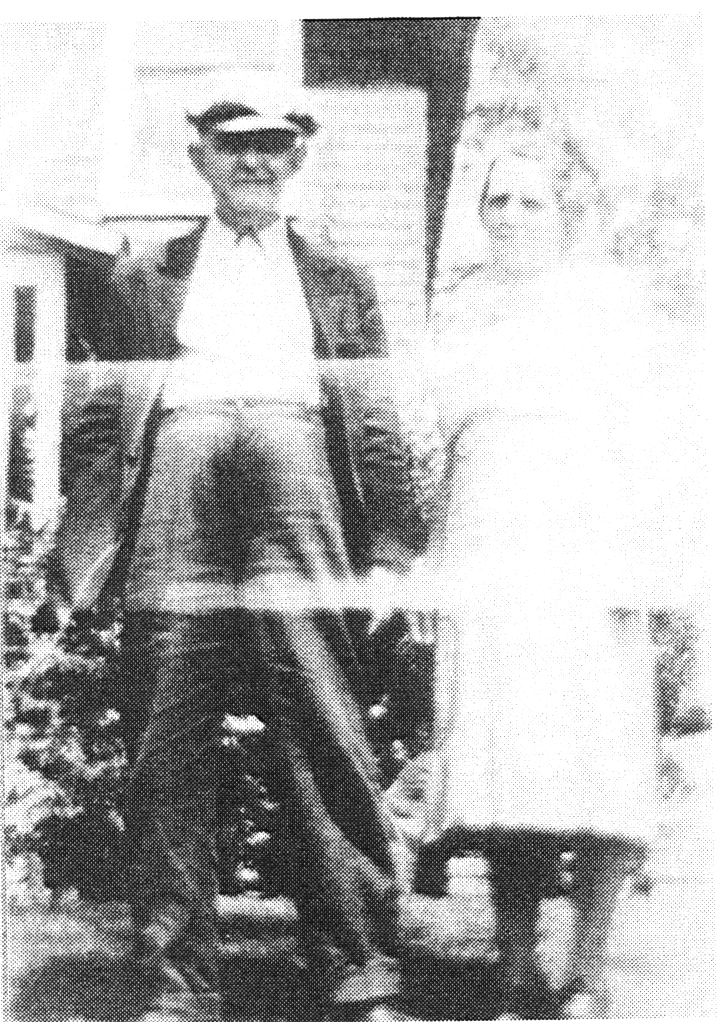
Ed married Alma Bahr of Ferney, South Dakota on February 7, 1906. He built a general store in Ferney[4] and made his home there. He was on the local school board for three years. He was vice president of the Ferney Bank, which finally closed, with about 50,000 others in the U.S. He became Postmaster in 1914.
Ed also farmed, which was a prosperous business until 1928. For more than ten years after that it was so dry that it was impossible to raise a crop. People who had been well-fixed became poor and were on relief. At one point Ed was raising sheep. Once the rains started again, the people became well-to-do again.
A 1961 article in the Aberdeen, South Dakota newspaper talks about the preparations for Ed’s 89th birthday and some of the history he had seen. Ferney had 70 citizens at that point and the birthday was declared “practically a legal holiday in Ferney” by one citizen. Ed had been running the grocery store in Ferney since 1904. John Harry I had actually purchased the store for someone else to run. But when Ed, a youth of 21, came out to look after the store for a short time, he just stayed. He and his wife, Alma Bahr resided above the store.
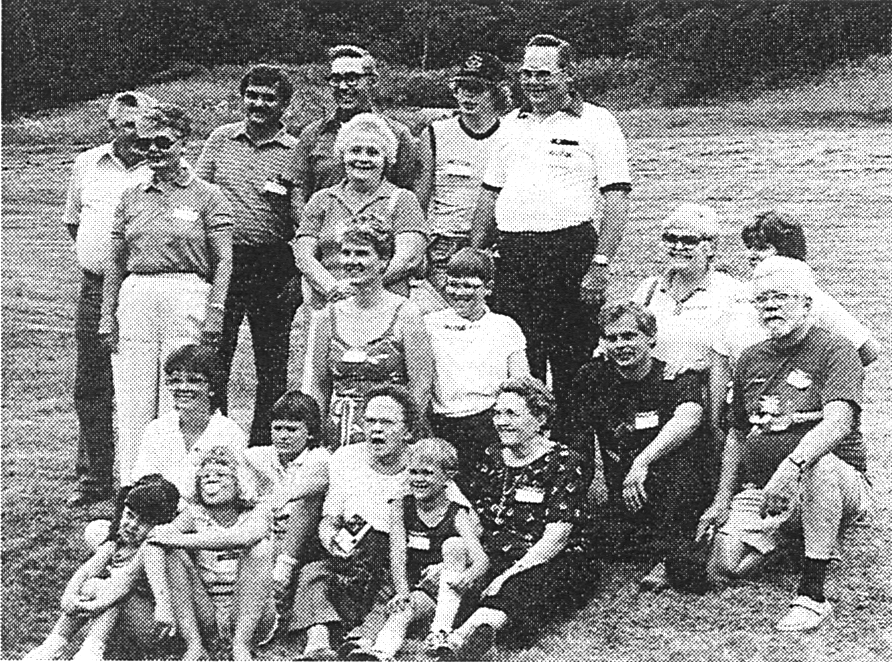
During a nighttime robbery of the bank next door, Ed got up to investigate and stubbed his toe on the door. Warned by one of the robbers not to look out the door, Ed went back to bed. After several hours of commotion, the robbers blew the safe and left with the money.[5]
Two of Ed and Alma’s sons, Marvin and Carrroll, operated a retail implement business, selling to a wide area. Their other children are Virginia Mildred, Vernita, Donald, and Maurice (Morris) Harry.
Footnotes
[1] “History of the Harry Family” 1961, p. 14.
[2] “History of the Harry Family” 1961, p. 13.
[3] Anderson-Sannes, Barbara, “Alma on the Mississippi 1848-1932” Alma, Wl: Alma Historical Society, 1980, p. 22.
[4] An entry in the journal for the store in Alma notes that John Harry sold to Ed Harry all stock at Ferney, S.D. on December 1, 1915 “including building and store fixtures with all merchandise” for $2,500.
[5] Max Cooper, West’s ‘Noisiest’ Bank Robbery Recalled” American-News, December 31, 1961, p. 19.