Life in Switzerland
At the time the family still lived in Switzerland, Johann’s mother, Maria, would send him to the store. One particular day, she gave him a Swiss mark with which to buy something. He rolled it along the road as he went toward the store, getting pleasure from watching the coin roll. All at once, the coin rolled off the road and into a field. John looked and looked for it, but failed to find it. When spring came, the grass was not so profuse and John thought of searching for the coin again. He had not hunted long when the lost coin was found.
Harry’s Islands
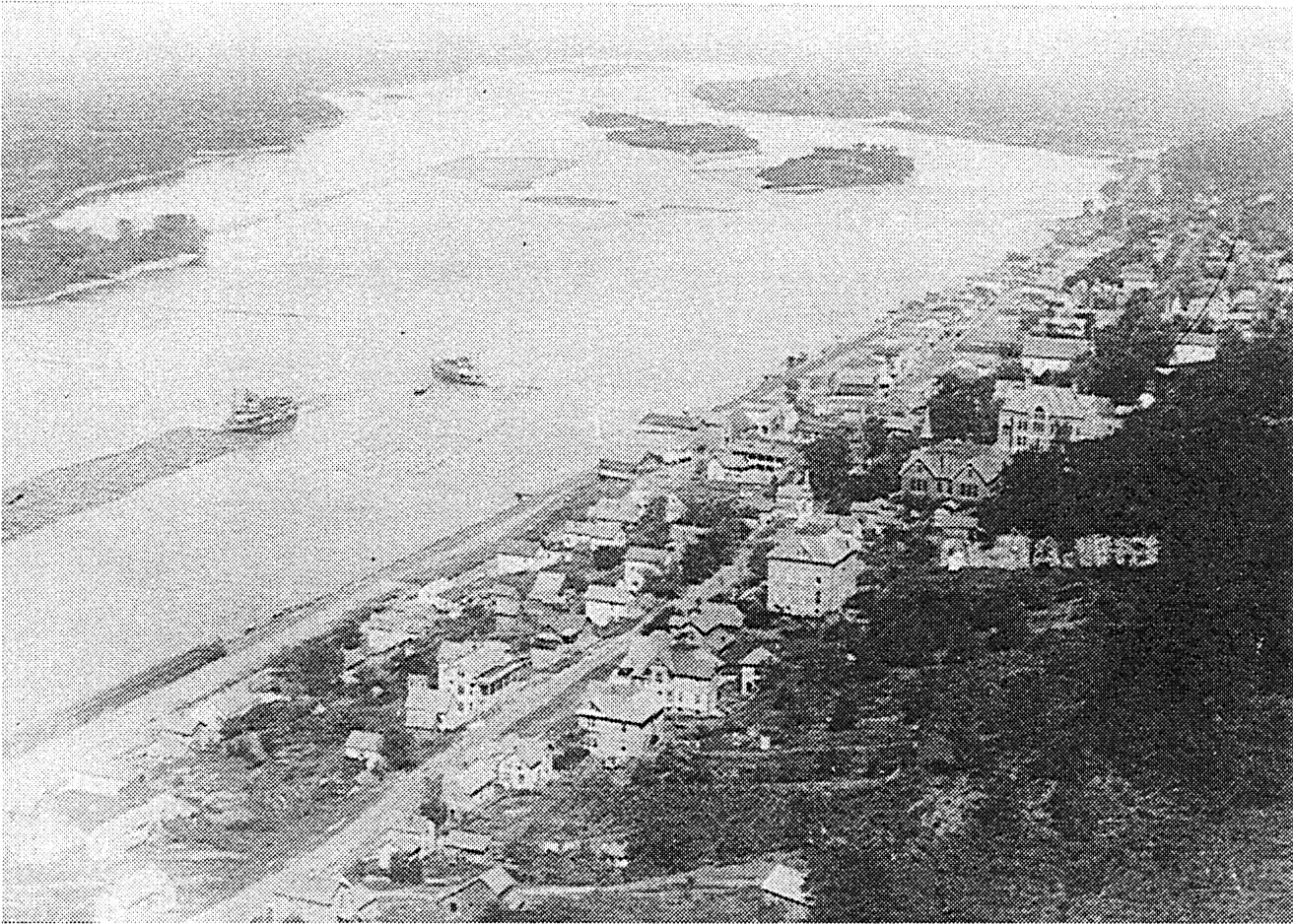
The family purchased two islands in the Mississippi which became known as Harry’s Islands. The northern island is just above the present day Government Lock and Dam Number 4. The higher water level as a result of dam has divided the island into a series of parcels of land sticking through the river’s surface. The lower island is just east of the northern end of “West Newton Chute.” Over the years, the family added to its original purchase until the total acreage for the lower island was approximately 500 acres. The northern island was much smaller.
Harry’s Island was so infested with carrier pigeons one year that the branches of the trees broke with their weight. They were also many crows living on the island. One afternoon the men noticed that the crows were much more noisy than usual, especially in the slough just north of them. However, they did not pay much attention to the birds and continued to cook the meal they were preparing. They dipped the water for their coffee out of the river, as the river water was clean enough for drinking in those days, and no one hesitated to use it. The next day a man came into their camp from upriver. He told them that as he passed the slough, he noticed a body in the water. He investigated and found a dead man, who had been in the water for some time, and who was wearing a money belt containing five thousand dollars in gold. The gold went to the man who found it in those days.[1]
Early Life at Alma
John’s initiation into the business world took place when he was only 10 years old and he worked in Minnesota for the summer. This early start served him well. While John lived with his parents and their family on their farm near Alma, he and his brother, Ferdinand (Fred) learned the wood business. For a number of years the brothers kept a wood yard and later a coal yard, from which they supplied passing steamboats with fuel.
They would tie up to the moving boat at either the upper or lower island and unload the supplies while the boat continued moving between the islands, a distance of several miles. When they reached the other island, they would detach from the boat and reload supplies for the boat.
In the winter they hired men to cut and rank wood on Harry’s Island, both for home use and the boat trade. It was necessary that these men had the necessary equipment with which to live while working on the island. One morning John and a few men left the mainland in a boat with a cookstove for the use of two Norwegians on the island. The wind was blowing very hard and the waves were extraordinarily high. Not only were the elements against them, but when they were halfway across the river, the boat sprung a leak and began to sink. The Norwegians, who were watching the difficult crossing, ran into the woods to avoid seeing the men drown, since they could do nothing to help.
However, John and his men had no intention of drowning. They merely pulled the boat back into shallow water, dumped the stove into the river, and crossed over to the island to the amazement of the woodcutters. Later in the day they got a better boat from a neighbor, crossed the river again, and after fishing the stove out of the shallow water where they had dumped it, they brought it over to the Norwegians.[2]
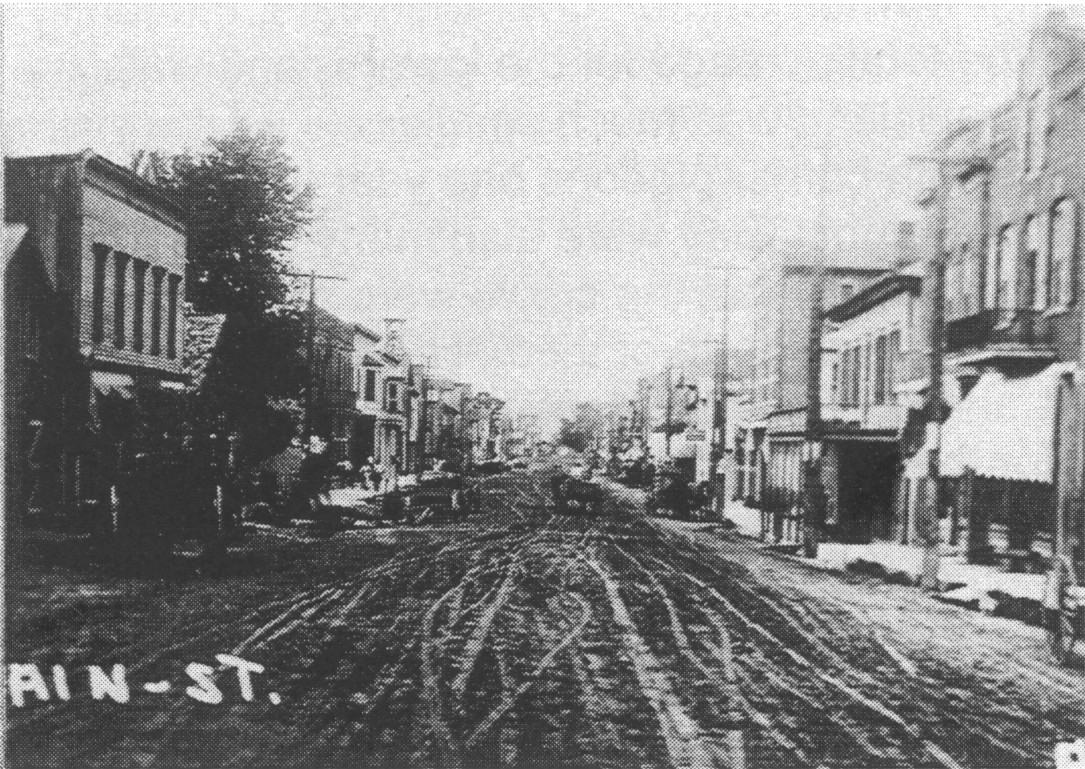
The Illustrated Historical Atlas of the Counties of Buffalo and Pepin, Wisconsin, dated 1878, contained this entry for Alma:
Alma, from its geographical position and its material and acquired advantages, is first in commercial importance of the villages of Buffalo County. It contains a population of about 1000 people.
It continues listing the particular assets as five general stores, one drug store, five blacksmith shops, two breweries, three shoe shops, two hardware stores, six wheat warehouses, three hotels, three livery stables, two saw mills, and three wagon shops.
Marriage
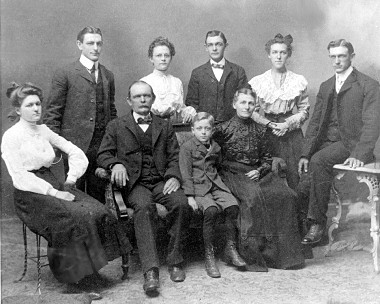
On February 12, 1872, John Harry married Annie Biewer at Alma, Wisconsin. John and Annie would eventually have nine children: Edmund, Clara, Emma, John F., Frank, Mae, Louise, Julia, and Earl. Emma and Julia both died when they were only 3 years old. Several of the children lived long lives, with Louise living to the age of 100, John and Earl both living to be 97 years old.
The Grain Business
In 1877, John Harry built a grain warehouse on the bay across from the store building. For the next ten years he bought wheat, which was shipped by boat in sacks since there were no trains in Alma until November 1885.[3] Wheat trade was a major industry in Alma. Buffalo County ranked second in the state in total wheat production in 1870 with much of that wheat being shipped out of Alma. Town streets were often choked with wagons waiting to unload their grain. Stores and warehouses would be open from dawn until past midnight to accommodate the trade. By 1879 Alma boasted seven grain warehouses, including one constructed by the Harry Brothers.[4]
When the trains arrived in 1885, the grain warehouse was converted into a grain elevator and feed mill. Building the trestle for the train tracks in 1864 necessitated filling in the mouth of the bay where the building was located. Direct access to the building from the water was cut off by this.
John built a pier in the river at Alma and put up a horsepower elevator for grain and brought in wheat for shipment. Sometimes barges that contained bins which would hold thousands of bushels of wheat would tie up there. Other times the boats would leave sacks for the grain to be put in while the they continued on to St. Paul. It took the boats 24 hours to go to St. Paul and back. From 60 to 75 African Americans would then carry the sacks onto the boat. There was always a string of men going up with the grain, and another going back to the elevator.[5]
This local boom in the wheat business lasted until the middle 1880’s. By then, there was a tremendous increase in the quantity of wheat from the Dakota territories, resulting in an dramatic drop in wheat prices. Also at this time, Wisconsin shifted from the mono-cropping of wheat to a more diversified agriculture based upon the dairy cow. A third factor in the decline was the opening of the Alma Milling Company in 1888. No longer needed as a grain elevator, John Harry’s grain storage building housed the local light company by 1904.
The Residence at 405 North Main– “The Store”
In 1881 brothers John and Fred Harry had Carl Urfer construct a residence at 405 North Main. This building served as a residence for both families until 1885. At that time, it was decided to open a general store on the ground floor and so a brick house was built at 402 North Second, on the hill directly above the store building, for Fred Harry’s family. John moved his family from the first floor to the second of the 405 building.[6]
In order to make travel between the two houses convenient, the family constructed wooden stairs between the residences. Soon the stairs became a popular route for other people wanting to get between the two north-south streets in town. Eventually, the city was forced to put in concrete stairs in a number of locations.[7]
The residence continued to be the permanent home of the John and Annie Harry family and the various children. Sometimes several of the families would each take a room in the building as their own home. Everyone shared the common rooms and dinner table.
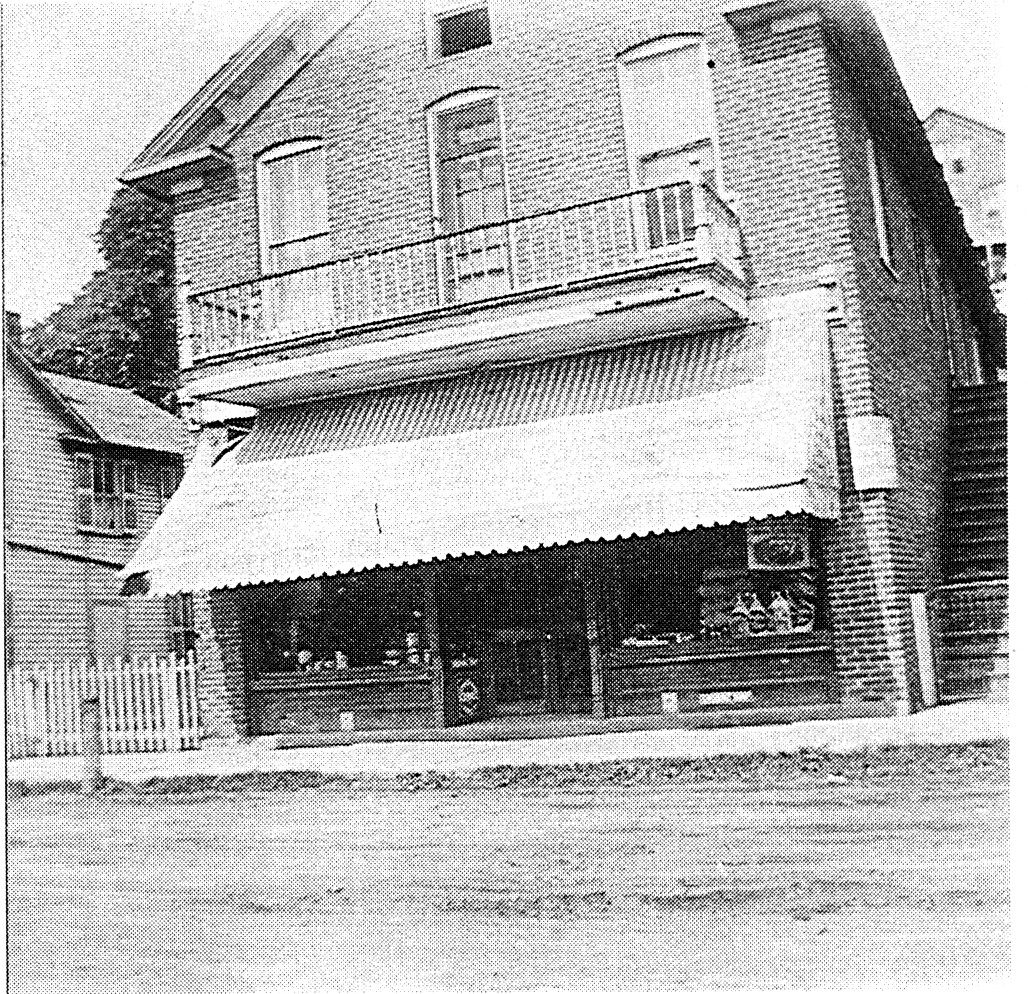
On a rather mild Christmas Eve in 1954, the chimney caught fire. Most of the damage was to the store and the first floor apartment then inhabited by Rene and Angeline Harry. The upstairs and attic had fire, water and smoke damage. While the building could have easily burned down, the fire was discovered burning between the walls about 3 P.M. When the damaged chimney was being removed, a flaw where it met at the first floor apartment was discovered and this was determined to be the cause of the fire.[8]
“The Store” as the building came to be known continued to be the home to Rene and Angeline Harry during their stint as operators of the grocery business while Earl and Louise Harry lived on the upper floor. Their brother, John F., also lived here for a time after the death of his wife Emily in 1965.
The River, the Rock Quarries and Wing Dam Projects
A typical river town, Alma was originally founded at one of the only two good landing places in Buffalo County, where the bluffs run down to the water, thus giving solid soil at the river’s edge, rather than bogs and marshes as is the case where there is an expanse of bottom land between the river’s edge and the hills. The other good landing is about 15 miles south in “Fountain City,” or “Homes Landing” as it was called then. Thus the river played a very important part in the development of Alma and its people.
John Harry was not exempt from the effect of the Mississippi on the lives of the people. When the government began working on the Upper Mississippi, deepening the channel by constructing rock and brush wing dams on both shores of the river, John took out contracts for brush and rock. He operated the rock quarries above town, giving employment to a crew of men and teams of horses. Often this work took him to various locations along the river from St. Louis to St. Paul. His family often accompanied him in a houseboat during the summer months.
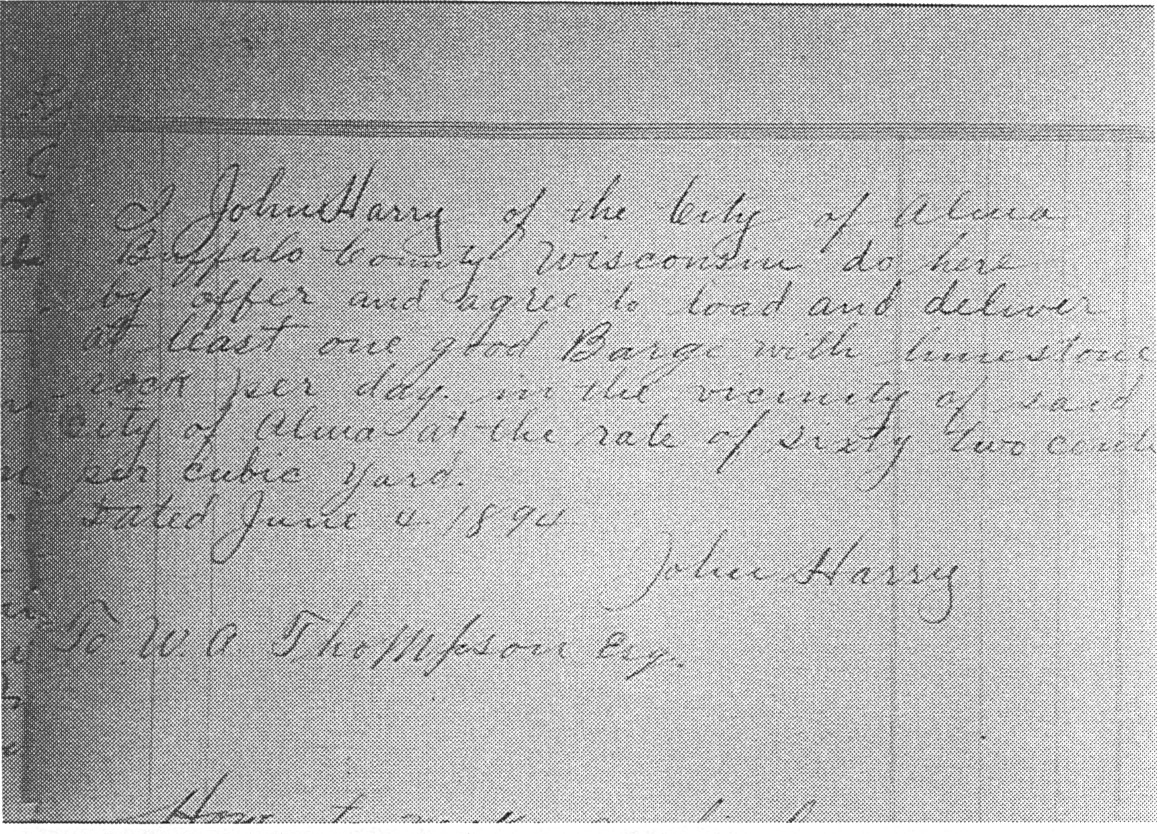
Once they were working about 25 miles below Auer’s Landing in Calhoon County, Illinois. While getting out rock there, Ed Harry generally sat where they were loading a hole with powder for the shot or blast. However, this day Ed was in a hurry, as he wished to get a letter in the mail. He sat there only a little while and then left for the post office, which was two miles away.
Ed was halfway through a field when he saw a volume of smoke arise from the ground 50 feet ahead of him. Ed thought where there was smoke, there must be fire. He looked for the fire but could not find any. Then he closed his eyes for a few seconds to see if the smoke would disappear. When he re-opened them, the smoke was still there. He then went to a higher place for a better view but he still could not see any fire. He closed his eyes again and re-opened them, and the cloud was still there. Again he closed his eyes and this time when he opened them, the smoke was gone.
He went on to the post office at Deer Plain, IL. He got the mail and waited by the counter for someone to talk to. The Postmaster said to him, “A couple of your men down at your quarry got burned?”
Ed said, “Not that I know of. I just came from there.”
The Postmaster said, “Yes, someone just went through on horseback after the doctor, and called in.”
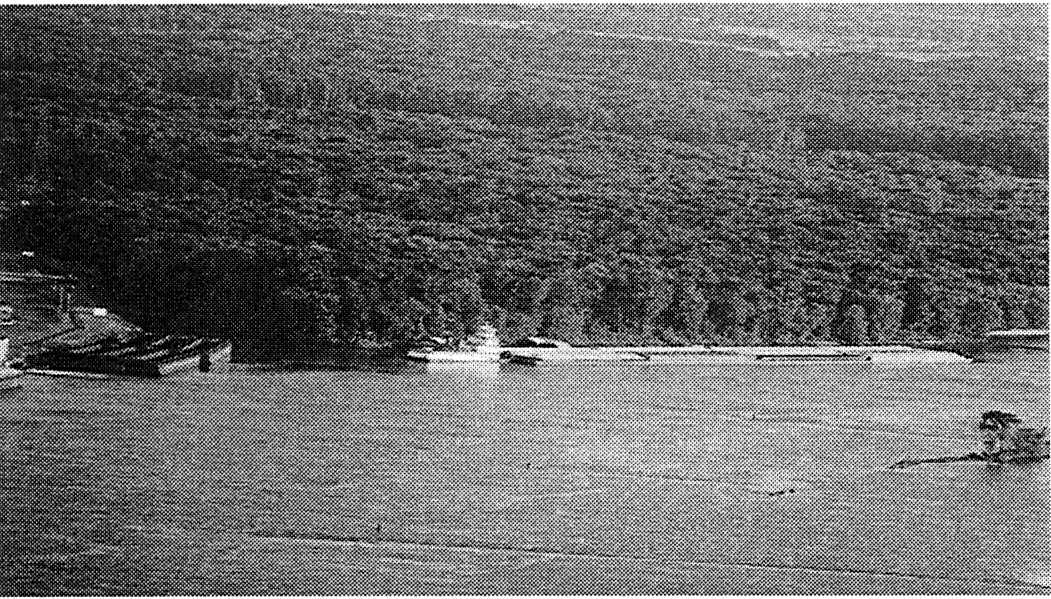
Ed said, “If that’s the case, I’d better start back.” The nature of the word was very dangerous. The men had to put powder down into the hole which they had drilled. When Ed arrived back, John told him that Phillip had a keg of powder explode in his hands. It took the skin off from above the wrist down to his fingertips. He lived 36 hours. Louis Biron was injured but survived. Both men were taken by boat to a hospital in St. Louis.[9]
The family was at Poppelton’s Landing in Calhoun County, IL, when the workmen stumbled on the remains of an arrow-maker and his family. This Indian arrow-maker had made a home for his family in a cave at the river’s edge, where he carried on his occupation of making arrows. Indians passing by his home in their canoes could easily stop at the edge of the cave and get a supply of arrows. This Indian had even dug a hole through the top of the cave as an outlet for smoke. The roof had apparently caved in and either trapped or crushed the arrow maker and his family, for when John’s men found the remains of the cave home, they also found the skeletons of the trapped family. The arrows that were found in the ruins were some of the most perfect arrows that the men had ever seen. The arrow-maker must have been an expert at his trade.
Another time, while blasting a stone from a quarry down river, the rock broke away and left exposed a perfect specimen of a prehistoric monster. Evidently the monster had died and then become petrified, as the animal was composed completely and entirely of stone. It measured 22 feet in height, and 19 inches through a joint. The monster was embedded 18 inches in the earth. The men were amazed, and the story of the find traveled quickly. People came from a hundred miles away to view the huge mass of animal and break off a piece for a souvenir. No one had any conception what the value of such a complete animal would be. The men had to continue their work and there was no way to remove the enormous chunk of rock except by blasting; and so this marvelous discovery was blown into chunks and shipped away to become part of some government wing dam. They also found large quantities of fossil rock about eight miles south of Davenport, where there was a cement factory in 1961.[10]
The Coal Business
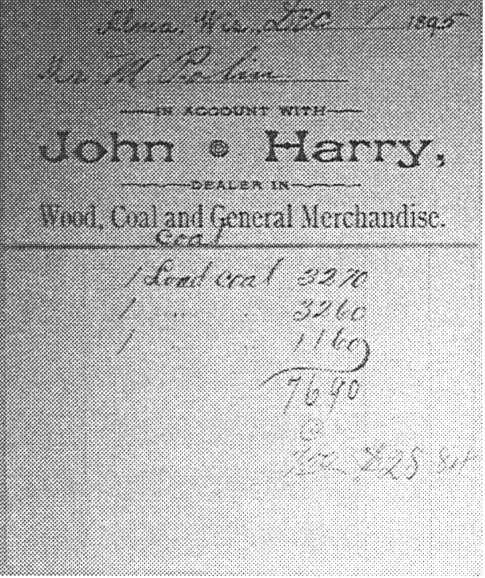
In 1887, John Harry opened up a coal yard and sold coal to the steamboats for many years. He also furnished the town people with their winter supply of coal in the fall.[11]
The Harry Grocery Store
In 1885, the Harry Brothers established a general store on the ground floor of the building at 405 North Main. John Harry continued to operate the store until his death in 1916. Ownership then passed to his son Frank, who operated it until his death in 1955. After that it was operated by Frank’s son, Rene and his wife Angeline. The store closed in November 1969.
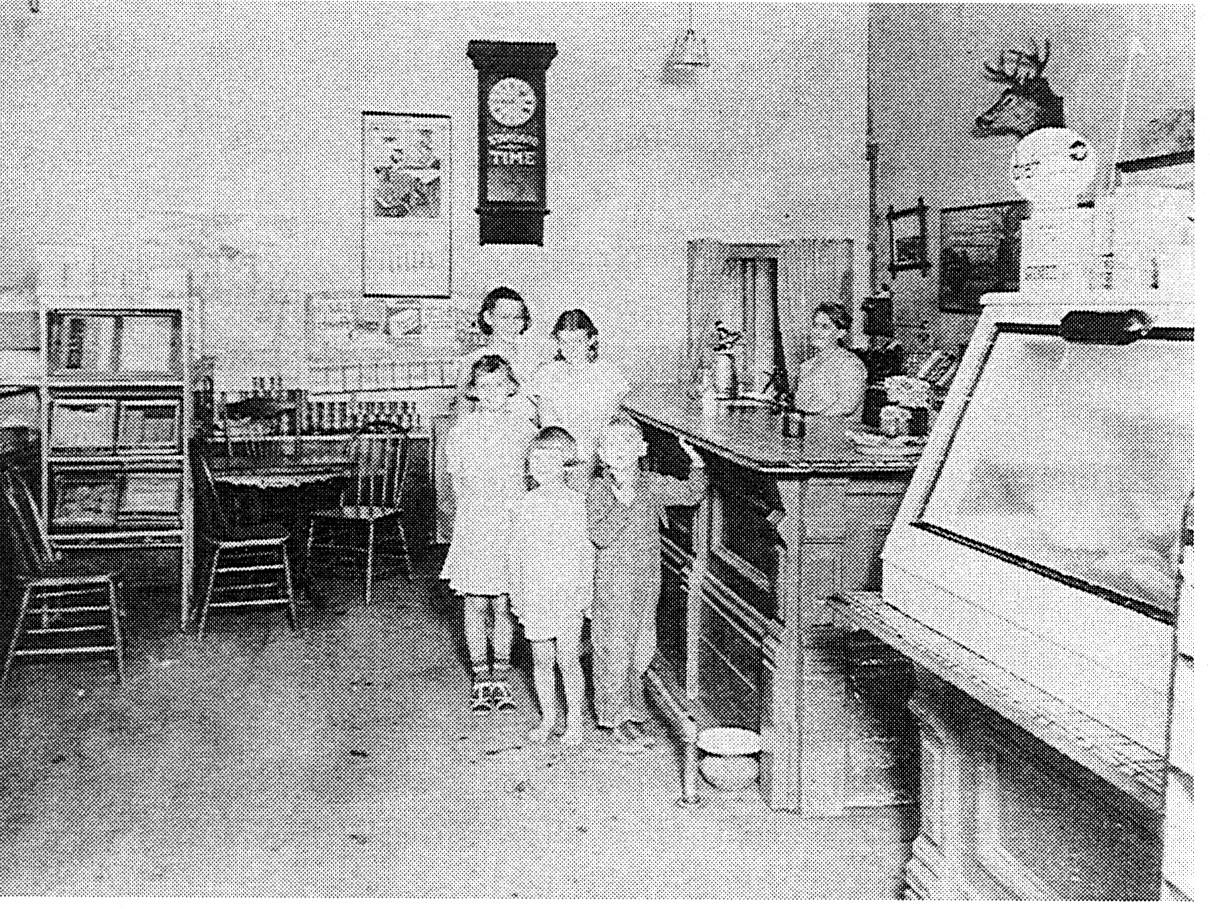
The store dealt primarily in groceries, although over the years the focus changed according to the needs and wants of the town. When the dam was being built and workers were flooding the town, accommodations were built in the store rooms in the back for them. A food counter was put in and cooking kitchen installed for Mayme to provide food for the crews.
Following the sale of the store building to Jean Schwaab Pellow, a journal of store purchases was discovered. The first entry is dated January 17, 1893 and is for soap and coffee purchase by John Harry. The soap is marked as costing ten cents and the coffee is one dollar. The last entry is for purchases by a fellow named Ed Scheump. He spent $12.06 on a variety of items.
One of the other documents found in the journal book is a letter to John Harry, dated February 21, 1913 from George Schmidt, the Assessor of Income. He wrote:
Your income tax report is received and so far as I can judge is correct in form. I note, however, by comparing your report with last year’s there is a considerable difference– while this also may be correct and in order, I thought you would probably favor me with a few lines in the way of an explanation.
John Harry made a copy of his response in the journal:
Your favor of February 21/13 is at hand. I beg to state that during the year 1911, I was a merchant and contractor and in 1912 I was a merchant only. My son having taken over the contracting business, I got $250 for services in 1912.
Other notations show additional financial information for the year 1912. John Harry’s total income was $3,950.68 with $50 in rent on the store and an income of $40.68 from “dwelling rooms”.
The Ice Business
In the 1890’s, the ice harvest turned into big business. In 1890 John and Fred had a contract to deliver five boxcars of ice daily to St. Louis. Huge blocks of ice were cut out of the frozen Mississippi or Beef Slough and transported by sleigh to one of the ice houses in the area. There they were packed in layers of sawdust to keep them insulated for use in the warmer season.[12]
Death of Emma and Julia
In 1879, three year old Emma and her six year old brother Ed developed what was then called “brain fever.” The doctor would not allow ice to be placed on the children’s heads and Emma died on September 27 in Alma. Her brother survived.[13] Her death certificate lists her death as “pneumonia complicated with dysentery.”[14]
When the family was living a short distance up the Missouri River in 1892, three year old Julia became sick with diphtheria. Because diphtheria was extremely contagious, officials would not allow her to be brought into the hospital and in a few days, on September 13, Julia died. It was impossible to bring her body home, so she had to be buried in the little town of Portage, IA., near St. Louis, MO.
The priest wished to have the children’s choir for Julia’s funeral but John said they should not because the children might get diphtheria too. It was also speculated that she could have died from mastoid as she had a lump behind her ear.
Meeting with Weyerhauser
In 1872, just after John and Annie were married, a man rapped on their door and asked to speak to John. Annie said John was still in bed, but that she would call him. When John came and greeted the stranger and spoke of the weather, the man asked if John owned the 80 acres where the Chippewa River entered the head of Beef Slough. He said that he would like to buy the land. John replied, “Yes, I own that land, but it all depends whether you can buy it or not. If you are a Weyerhauser man you can have it, but if you are from Knap Stout Company, then you can’t.”
The stranger pulled off his cap and tossed it to the ceiling, shouting, “I’m on the right side.” The stranger turned out to be no other than old Weyerhauser himself. He stayed with John and Annie for three days and three nights until he could get a lawyer from Winona to close the deal.[15]
River Stories
John once had the misfortune to lose his new watch in the river. He at once got a rake and fastened fish hooks to it, and raked where the watch went down. He was almost ready to give up in despair, but decided to try just once more. He tried and was rewarded by finding his watch dangling at the end of one of the fish hooks.
John, Fred, and another man took lumber down river on a barge, floating with the current and using long sweeps to direct the barge where they wanted it. One watched while the others slept, only waking when the guard called “Left” or “Right,” in order to keep in the channel. They also came home in a boat, and they found it necessary always to have someone on guard while the others slept, lest their money be stolen. One night the guard went to sleep and when he awoke, their money was gone.
John Harry I was a great swimmer. In the winter he would always walk ahead of the teams carrying wood as they went across the river on the ice, to be sure the ice was safe. As a result of his carefulness, they never had an accident.[16]
Indian Relations
In 1881, John and Annie’s family went to Grey Cloud Island on the steamer “Josephine,” a boat of the Diamond Jo Line. The Indians did not want them on this island even though they had sold John the rights. John got out rock on the lower end, on the rock bank. They got brush on the upper end, about a quarter of a mile down a slough. The Indians did not come near them all summer. Then in the latter part of September, two Indian maidens came and began to talk. Neither Annie nor Ed could understand them, so they called John. He talked to them for about half an hour, then he told Annie to fix lunch and invited the two Indians girls to eat with the family, which they did. When they left, John sent a sack of beans, some port, and some sugar with them. The next Sunday three more came and they had lunch again. John gave them more food to take away with them. Four more Indians were on hand for lunch the following Sunday, but they did bring three pails of cranberries for Annie; and the same four Indians returned again the following Sunday, this time bringing with them all the wild ducks they could carry.
At this point, John was ready to break camp and go home for the winter. The next year John was called to St. Paul, MN. to take the same work again. He did not want the job because he had lost money the year before. However, he went down to look it over, and went to the first Indian hut. A squaw whom he did not know came out to meet him and said, “Good man come back.” He met another squaw who said, “You must (have) plenty to eat,” and a third said, “You can go over our gardens.” Still another said, “Yes, the bucks like you now.” John went back to St. Paul and said he would try the first month. He stayed all summer.[17]
Trip to Hoop’s Landing in Calhoun County
In 1894, John Harry went to Calhoun County at Hoop’s Landing. At that time there was no railroad, bank, or Black in the county. The infamous James Brothers used this county as a hangout. On the way to the post office was an old house which John and his family passed whenever they went to the post office. Usually an old lady was sitting on the porch smoking her pipe.
One day John said, “Let’s go in and talk to the old lady.” They did, and the old lady was glad to have them come. After they had talked for some time, she told him that Frank James and Cole Younger had given her a start. John asked her to tell them about it, and she did. She told them that Frank James and Cole Younger came to her home and told her they wanted something to eat, and she replied that she had nothing to give them.
They answered, “You have some chickens running around out there. Get them for us, and we will pay you well.”
“They are all I have to make a living with,” she told the men.
The men said, “We’re hungry. Get those chickens and we will pay you well.” The old lady went out and got the chickens. She prepared them and served them to the outlaws. As they ate, they noticed that she was crying.
“Why are you crying?” they asked her. “Are you afraid of us? We won’t hurt you. We’re just hungry, and we’ll pay you for the chickens.” When they finished their meal, one of the outlaws noticed she was still crying. He got up and told her he wanted to know just why she was crying. She told him that her home was mortgaged and that the man who held the mortgage was coming after his money that night.
“How much is it?” asked the outlaw.
“Six hundred dollars.”
“All right, here is six hundred dollars,” he said, handing her the money. “Are you sure that is enough? Be sure you get all your papers when he comes, and be sure that you put a light in your window too.”
The man who held the mortgage came after his money about eight o’clock that night. The old lady put a light in her window, and the man was robbed of the six hundred dollars she had paid him, as he was on his way home.
The family came to believe the old lady’s story as Ed Harry heard the same story on the radio, the very story that he heard from the lips of the old lady.[18]
Travel Adventures
When the family came home that year, they came with Richtman’s fleet. Six thousand barrels of apples were on board. Everything went well until they passed over the Rock Island rapids. Jack Richtman, Jr. hired a rapids pilot. Ed and Richtman were on the lower deck.
Suddenly Richtman said, “Let’s go upstairs. They’ve got her pretty hot.” They started for the pilot house, and just then a flue let go. For five minutes they could hardly breathe because of the hot steam. Finally the steam cleared enough so that they could come out on the lower deck.
When they got there, they met Billie Henning coming over the bow of the boat. He was hanging on a rope that reached from the head of the bow of the boat to the head of the barge of apples. He said that it got so hot at times that he was going to let go, but he held on until he could pull himself up onto the bow of the boat again.
One man was blown off the boat and never found. The apples were sold along the way at the various towns. Wabasha took all that were left.
John and sons Ed and John Ferdinand, fixed up a covering on the back of a line boat and went on a trip down the Mississippi. They started late in the season so they hurried until they got to St. Louis. They passed all kinds of floaters. As they passed the Kentucky shore, they saw a floating barge. As this barge neared a town, it would blow a horn and all the blacks would come running with their jugs to be filled.
Later they met two floaters who had nothing but fish to eat. Besides that, one had malaria. John said that he would help this malaria fever when they came to the next town. This man told a story about when he was a mate on a Great Lakes vessel. The captain had a six year old daughter with him. One afternoon the ship caught fire. The captain’s daughter stood behind the man at the wheel all the time. The captain finally came up and told the man to get into the lifeboat. However, the lifeboat was overloaded and he refused to overload it any more. They tried to get the girl into the boat, but she refused. Then the man took a large pole, threw it into the lake, and jumped in after it. Soon the girl called to him to catch her too. The men in the lifeboat wanted to pick them up, but they would not get in. They were seven miles from shore. After floating about an hour, a small boat picked them up.
When John and his sons reached the next town, John gave the man a tablet for his malaria, which probably cured him; as the same kind of tablet had cured John, who was very sick with malaria previously. The entire group floated together until they reached Greenville, Mississippi. Between St. Louis and Cairo, at the mouth of the Ohio River, there are places where the river boils up and sends forth sounds which can be heard for ten miles. They saw the Robert E. Lee laying on the west shore as they went by. A half-hour late, the Robert E. Lee pulled out, hit a snag, and sank.
They stayed in Greenville ten days. One day while they were leaving the levee, two blacks were fighting on shore. One accused the other of having a quarter while the other insisted that he had only 15 cents. They had gotten money by selling fish. John and his party heard their argument as they passed by the blacks on the way to the depot. They had not been in the depot long before the report came in that one black down on the levee had cut another black open in order to see his heart.
When John Sr., John Ferdinand, and Ed got ready to go home, they had to take a train about eight miles back to the Yazoo Valley Line, and they arrived there about 8:30 that night and changed cars. The train was late so they talked with some twenty other passengers who were also waiting for the train. A counter in one corner had the appearance of a bar, and made John think that at one time the station might have been a saloon. One young fellow threw his coat over this bar and lay down on it. John Ferdinand told Ed that this fellow had pulled out a gun and laid it down behind him. The people all slept in chairs until daylight. Finally the young fellow who had been sleeping on the bar got off and began to talk to Ed. Ed asked about the gun.
“Did you see that?” the young man asked.
“Yes,” replied Ed.
The young man explained, “Well, you see, I’ve been a negro driver for about three years and several of the blacks said they would get me. I’ve been on the wait for them ever since.”
From here they went to Memphis, TN. where they bought tickets back to Alma.
In the early nineties, John started west with L.R. Hunner with four carloads of potatoes. They sold their first carloads to a man from Alma whom they met in Helena, Montana. The second carloads, which they came back to get, they sold in Seattle.[19]
Close Call
The February 25, 1885 Alma newspaper recorded this event involving John Harry:
John Harry and John Gibson came very near being killed by a run-a-way team last Wednesday. They were up at Wabasha and started for home about 5:00 P.M. Their sleigh came along the river just as a switch engine came. It frightened one of Gibson’s horses “Crazy Jane” and both men got out to hold the team, Gibson at their head and Harry at the reins.
The horses got away from Gibson, throwing him down and then dragged Harry some distance, but were finally stopped. Gibson had his shoulder dislocated and Harry was thrown against the hub end of the sleigh bean, nearly breaking his back. They drove and Dr. McVey put Gibson’s shoulder in place. It was a bad spill for both men.[20]
The Alma Electric Light Company
In 1904, the power plant which had been serving Alma for several years was moved into the basement of the John Harry elevator and son-in-law R.N. Smith arrived to serve as its engineer and manager.[21]
In 1893, Gottlieb Kurtz had located the power plant in the far north section of Alma. When it was offered for sale, John Harry worked to get financial backers and was able to purchase the plant. In January 1905, the Alma Electric Light Company was incorporated with John Harry serving as president and secretary, Charles Schaettle, Jr. as vice president, and Fred Harry as treasurer. By the end of January, Alma once again had electric power although the power was only used for lighting purposes and therefore was only supplied from sunset to midnight.
Customers were charged 25 cents per month per light socket. Alma itself received a $63.00 bill in November 1912 for the street lights and lighting for the city hall. Earl Harry recalled that the family installed one light in the residence over the store because “Dad owned the power plant and we wanted to stay up with the neighbors.”[22]
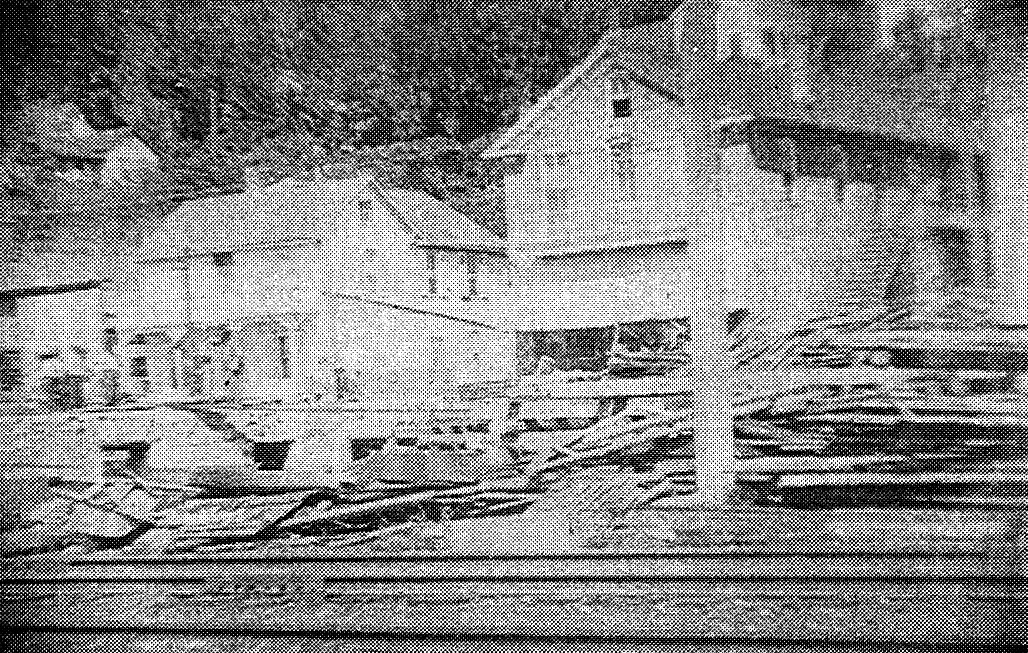
When R.N. Smith moved the multi-story grain warehouse turned grain elevator which was above the power plant to a location about a block south, he placed a new roof over the old location’s remaining foundation walls. These walls barely projected above the level of the road. The power plant continued producing electricity for the town. Logs floating in the river and pieces of wood were used to keep the plant operating. It required two cords of firewood each day.
John E. Harry recalled learning of his family’s part in the electric company from a school discussion about direct current and alternating current.[23] The Alma Electric Power Company supplied direct current, seen by the teacher as a less effective means or power, one which certainly would not become the standard throughout the country.
In 1917, the Wisconsin and Minnesota Light and Power Company bought out the family’s light company and took over its service area.[24]
Death of John Harry I
John, Annie and son Earl left for California in 1915. John was suffering from tuberculosis and it was hoped that the climate in the west would help improve his situation. He died there in February 1916.
Some of the events around the funeral were very memorable to people years later. When John’s body was brought back to Alma, the wake was held in the family residence above the store. A glass cover was over the casket. The number of people who came to pay their respects exceeded what the building could support and a beam holding up the floor cracked. Future family wakes were held in the John F. and Emily Harry residence across the street at 316 North Main until it became the common practice to hold wakes at the funeral home. Eva B. recalled being driven to Alma in a buggy and getting yelled at by her mother for waving to a train engineer, a perceived breakdown in respect for her deceased uncle.[25]
John had made some of his funeral plans early. On November 5, 1879 he had purchased Lot 13 in the Alma Cemetery.
Death of Annie Harry
Annie had been in failing health since August of 1934, suffering from stomach cancer. She was known to have had a stomach problem for a number of years and would take a teaspoon of river sand which she claimed helped her digest her food. She died at home at 5:30 P.M. on Saturday, April 20, 1935 at age 81.[26] The next day was Easter.
During her illness, Annie lay on a bed in what was the big kitchen in the residence above the store. Her a daughter, Louise, took care of her, wetting her lips when they got dry. She could not eat. The family did not call the Catholic priest to come and administer the last rites. Fred Schwaab finally went up the hill to the church to speak with the priest.
The reason for the delay is unclear. Many members of the family had stopped attending the church. Why this happened seems to be lost in history. One speculation is that members of the family were upset that John Harry was not allowed to be buried from the church when he died in 1916. This was the case even though he had donated all the rock for the church building predating the current church building.
Another theory is that the break came about with the death of Mary Harry. Mary, the wife of Victor, did not feel good but attended church services in spite of the protests from the relatives. She got sicker from the cold church, possibly with pneumonia, and died. Some in the family are supposed to have blamed the church for her death.
Regardless, after some time, the priest was called to Annie’s bedside and he administered the sacrament to her. Although she had been restless before, Annie fell asleep and was surprised the priest was gone when she woke up. However, Annie felt so good that she got up and played cards with others in the family.[27]
According to the town newspaper, “out of respect for Mrs. Harry, who was the wife and mother of some of the city’s foremost business men and citizens, the business places of the city were closed … during the time of the funeral.”[28] Funeral services began at 9:00 A.M. on April 24 at St. Lawrence Catholic Church, celebrated by the Rev. C.B. Fries. Annie’s sons John, Edmund, Earl, and Frank Harry and son-in law R.N. Smith and grandson, R.H. Smith served as pallbearers.
Annie Harry’s obituary is quite a tribute to her life of altruism.
At last long sleep of death came Saturday to Mrs. John Harry, one of the oldest residents of this city, bringing relief from a lingering illness and rest after a long life of loving service. Ever quiet and unassuming in her nature, the extent of her goodness was fully realized only by her family and nearest friends. Through all her life she has happiest when she was most helpful, and even when she had attained an age when most elderly folk need care rather than giving it, she did much useful work, continuing to do so after she had passed her eightieth year and up until a few months before her death.[29]
Footnotes
[1] “History of the Harry Family 1961, p. 8.
[2] “History of the Harry Family 1961, p. 8
[3] “History of the Harry Family” 1961, p. 10 records the date as 1884. However, the book “Alma on the Mississippi” puts the date for the trains arriving in Alma as November 1885, while work began in 1884.
[4] “Anderson-Sannes, Barbara, “Alma on the Mississippi 1848-1932” Alma, Wl: Alma Historical Society, 1980, pp.4748.
[5] “History of the Harry Family” 1961, p. 13.
[6] Anderson-Sannes, Barbara, “Alma on the Mississippi 1848-1932” Alma, Wl: Alma Historical Society, 1980, p. 98.
[7] Letter from Lawrence Harry to author dated March 16, 1982.
[8] Beers, Joyce, “Excerpts of Emily’s Notebook” (no page numbers) and letter from Angeline Harry to the Fred and Ruby Schweab family, dated Sept. 15, 1985.
[9]“History of the Harry Family” 1961, p. 23-24.
[10] ”History of the Harry Family” 1 961 , pp. 10-11 .
[11] “History of the Harry Family” 1961, p. 14.
[12] Anderson-Sannes, Barbara, “Mississippi 1848-1932” Alma, Wl: Alma Historical Society, 1980, p. 73.
[13] History of the Harry Family 1961, pp. 11-12.
[14] Buffalo County (Wl) Death Registry Vol 1, 58. The certificate, which incorrectly lists the child as “Anna”, also lists her death date two days later than family records show.
[15] “History of the Harry Family” 1961, p. 12.
[16] “History of the Harry Family” 1961, p. 12.
[17] “History of the Harry Family” 1961, p. 14.
[18] “History of the Harry Family” 1961, p. 15.
[19] “History of the Harry Family” 1961, pp. 15-17.
[20] Buffalo County Journal February 25, 1885.
[21] Anderson-Sannes, Barbara, “Alma on the Mississippi 1848-1932” Alma, Wl: Alma Historical Society, 1980, p. 24.
[22] Earl Harry from a conversation with author.
[23] Harry, John E., “Long Ago and Far Away” Part 2: Her Married Years: After the Great War, 1995, p. 5.
[24] Anderson-Sannes, Barbara, “Alma on the Mississippi 1848-1932” Alma, Wl: Alma Historical Society, 1980, p. 77-78. See also John E. Harry, My Mother Emily: Part 2: Her Married Years: After the Great Wart pp. 6-8.
[25] Letter from Ruby Schwaab to Lawrence Harry, dated November 4, 1981.
[26] Buffalo County Death Registry, vol 11, 209.
[27] Notes from Ruby Schwaab dated March 7, 1982.
[28] Buffalo County Journal
[29] Buffalo County Journal